



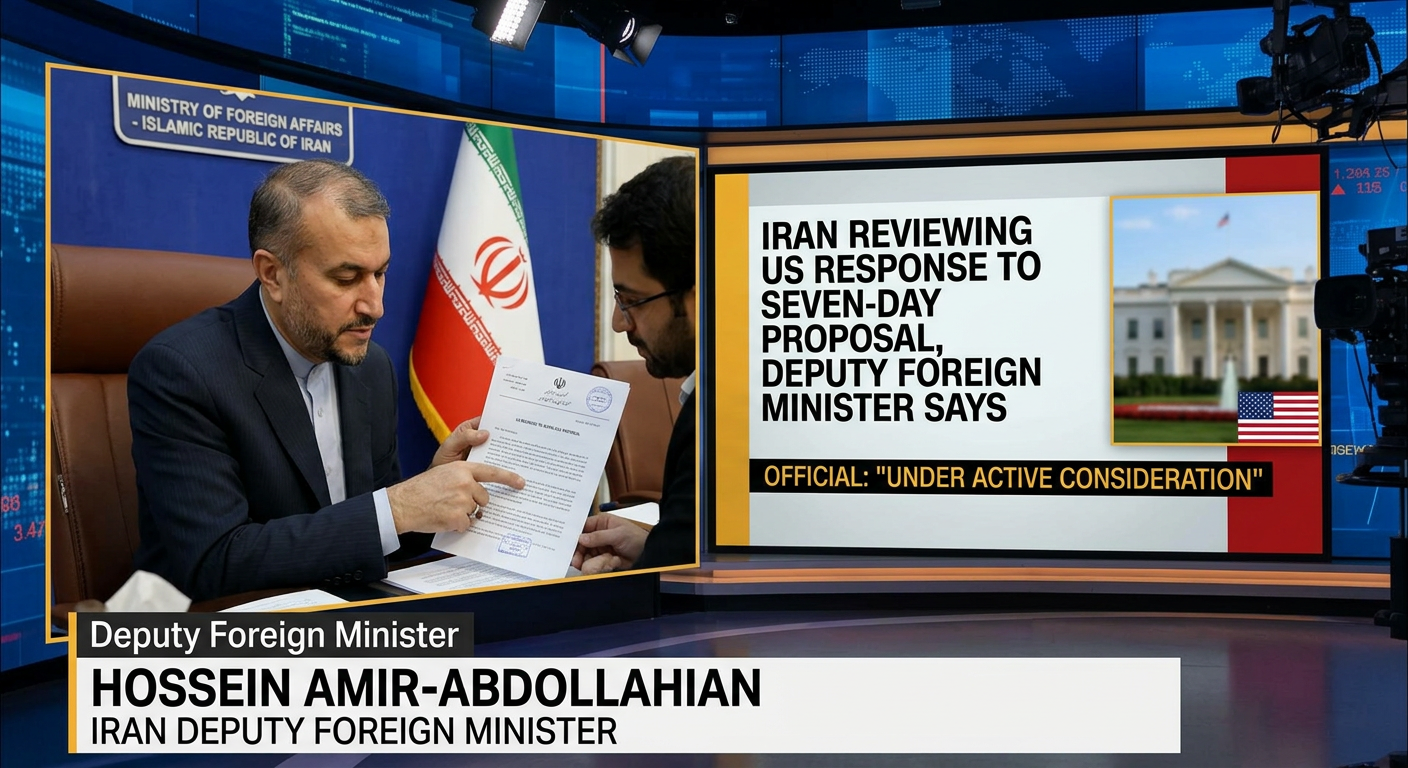
“Iran Reviewing US Response to Seven-Day Proposal, Deputy Foreign Minister Says“
Oct. 4, 2026
Iran seven-day proposal: Iran is reviewing Washington’s response to its seven-day proposal, Deputy Foreign Minister Kazem Gharibabadi said Sunday, as Tehran and the United States continue to trade messages through intermediaries over the Strait of Hormuz.
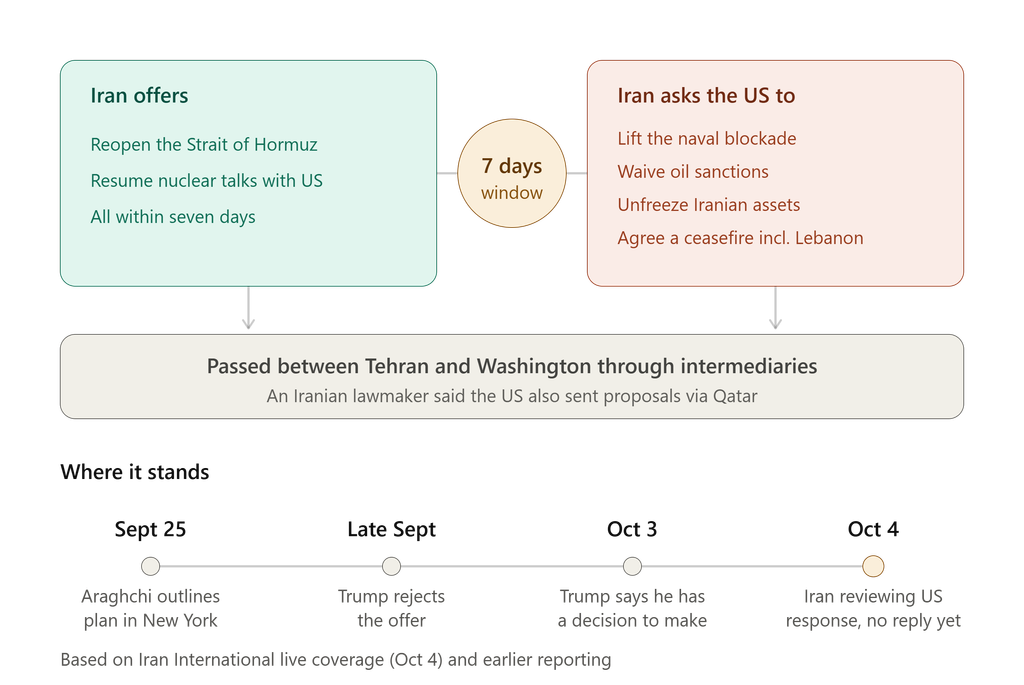
Gharibabadi said the plan, outlined by Foreign Minister Abbas Araghchi in New York, was passed to the US through intermediaries, which then gave their views on it. Iran will communicate its final position through the appropriate channel once its internal review is complete, he said. He added that Tehran remains prepared for “other scenarios.”
Who is negotiating
Iran also rejected President Donald Trump’s claim that Washington does not know who its Iranian counterpart is. Officials said a six-member committee under the Supreme National Security Council oversees the talks.
What the proposal involves
As previously reported, Iran’s plan would reopen the Strait of Hormuz and restart nuclear talks within seven days. In return, Washington would lift its naval blockade, waive sanctions on Iranian oil and accept a ceasefire that includes Lebanon. Trump rejected the offer in late September. Mediators have kept working with both sides.
Mixed signals from Tehran
Iranian lawmakers sent conflicting messages on Sunday, according to Iran International’s live coverage.
- Alaeddin Boroujerdi, a member of parliament’s national security committee, said the US had recently sent proposals through Qatar. He said Iran would not change its position on Hormuz and did not expect Washington to escalate militarily before elections.
- Ebrahim Rezaei, of the same committee, said Washington must either accept diplomacy or face Iranian missiles. He said Iran is preparing for worst-case scenarios and has not tied its decisions to US elections.
- Parliament deputy speaker Hamid-Reza Haji Babaei said talks are underway but doubted they would end in an understanding.
- Committee spokesman Hassan Ghashghavi said the sides are already at a post-negotiations stage on Hormuz.
- Ali Khezrian criticized Pezeshkian and Araghchi’s New York trip, saying it made Iran look weak and divided.
Separately, army spokesman Mohammad Akramini said Iran has begun working to extend its missiles’ range after concluding during the war that an upgrade was necessary.
Trump’s remarks
Trump told reporters Saturday that he had a decision to make on Iran. He said the country had been badly weakened and faced a choice between an easy way and a hard way. He also claimed Iran is virtually giving up plans for a nuclear weapon. Iran’s mission to international organizations in Vienna rejected his accusation that drugs were being produced at Iranian nuclear sites, saying the facilities are under round-the-clock monitoring.
Regional and market fallout
- The UK Maritime Trade Operations agency said a tanker was struck by an unknown projectile in the Strait of Hormuz, damaging its engine room.
- Yemen’s Iran-backed Houthis claimed missile and drone attacks on Saudi Aramco facilities in Riyadh and Khurais that caused major fires. That claim has not been independently confirmed.
- Yemen’s Saudi-backed presidential council announced an operation to retake Houthi-held territory.
- Iran accused Britain of complicity in attacks on the country by allowing its bases to be used by US and Israeli forces.
- The US dollar rose above 2.7 million rials on Iran’s free market.
Why the Iran seven-day proposal matters for oil and gas prices
About a fifth of the world’s oil and gas normally moves through the Strait of Hormuz, so the fate of the Iran seven-day proposal feeds straight into energy markets. Brent crude reached about $119 a barrel when the conflict began. On Sept. 25, as Iran’s foreign minister floated the plan, it was trading near $104. A deal that reopens the strait would likely pull prices lower, and a breakdown would push them back up.
The effect reaches American households as well. The Congressional Budget Office projects the war will leave inflation half a percentage point higher heading into 2027. In an early-September Marquette poll, 80% of adults said gas prices had risen over the past six months. The war’s reported cost has passed $43 billion.
The calendar adds pressure. Trump has said US attacks could resume after the Nov. 3 midterms if there is no satisfactory agreement. Iranian lawmakers read that differently on Sunday. One said Tehran does not expect intensified US operations before the election. Another said Iran has not tied its decisions to the US vote.
This is a developing story and will be updated.

