



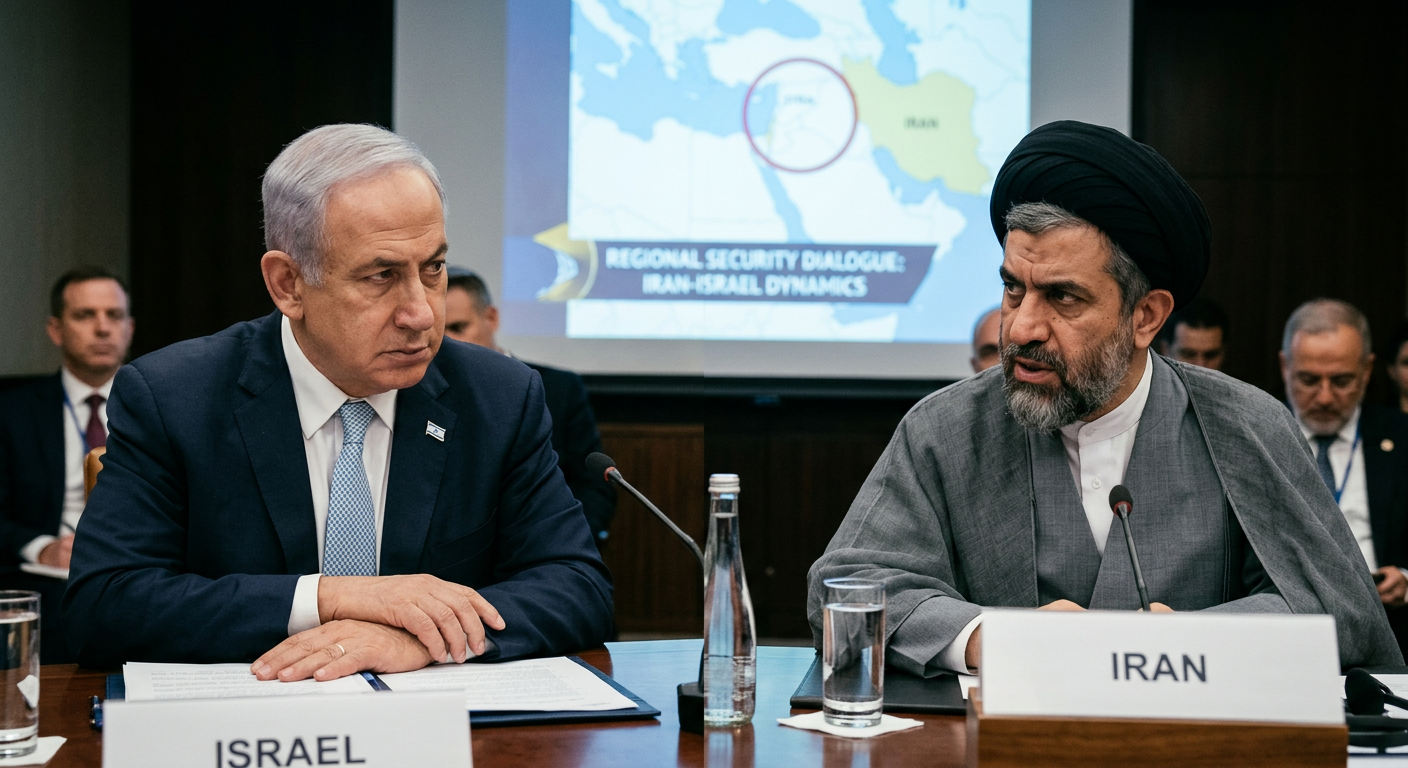
Operation Epic Fury: The Opening Strike
The war between Israel and Iran erupted on February 28, 2026, when the United States and Israel launched joint military operations against Iran — codenamed Operation Epic Fury by the US — following the breakdown of US-Iran nuclear talks. The opening salvo was devastating and deeply personal: it killed Iran’s Supreme Leader Ali Khamenei along with four members of his family in a strike on his compound. President Trump said the goal of the attacks was to trigger regime change from within Iran and to permanently dismantle Iran’s nuclear program.
Iran responded within hours, launching waves of missiles and drones not just at Israel but at US embassies, military bases, and oil infrastructure across the Middle East. Israeli airspace was closed for days as the country came under direct, sustained missile attack for the first time in this way.
Israel Under Fire
Over the following weeks, Iran fired roughly 650 missiles at Israel and the West Bank. Despite Israel’s multi-layered missile defense — interceptor systems, early-warning sirens, and one of the most extensive shelter networks in the world — a number of missiles got through, with painful consequences:
- The deadliest single strike came on March 1, when a missile hit a residential neighborhood in Beit Shemesh, a Jerusalem suburb, killing nine civilians after directly striking a public bomb shelter beneath a synagogue.
- A later strike on Dimona and nearby Arad — home to Israel’s main nuclear facility — wounded around 180 people in one of the war’s sharpest escalations.
- Strikes also hit Tel Aviv, Haifa, and other cities, some using cluster munitions that caused injuries well beyond the initial impact zone.
By the time the heaviest fighting subsided, Israel’s Home Front Command reported that 6,473 Israeli residences were damaged badly enough that residents lost their homes, and more than 7,500 Israelis were hospitalized during the conflict. At its peak, the Home Front Command mobilized around 45 battalions — roughly 25,000 soldiers, or 84% of its maximum call-up capacity. Overall, all 24 civilian fatalities from Iran’s missile attacks were people who were not inside bomb shelters, with cluster munitions responsible for 10 deaths and conventional missiles for 14, and more than 5,500 Israelis were displaced from damaged homes. Wikipedia’s running tally, drawing on multiple official sources, puts Israeli losses at 27-28 soldiers and a contractor killed, 28 civilians killed, and nearly 9,000 people injured in total.
Israel’s Air Campaign Over Iran
Israel’s own campaign against Iran was extensive. The Israeli Air Force dropped over 18,000 bombs on Iran during the war, flying more than 1,000 waves of strikes, hitting military bases, weapons production sites, IRGC command facilities, and — controversially — infrastructure tied to Iran’s nuclear program.
Iran’s own casualties dwarfed Israel’s. Iran’s Ministry of Health reported that by June 10, at least 3,468 people had been killed in the country since February 28, including seven infants, 376 children and 496 women, with more than 26,500 people injured. US and Israeli estimates put Iranian military losses even higher, citing more than 6,000 military personnel killed, while human rights monitors offered somewhat lower but still staggering civilian and military death tolls.
A War That Spilled Across the Region
The conflict quickly stopped being a two-country fight. Hezbollah, Iran’s most powerful regional ally, opened a front from Lebanon on March 2, striking an Israeli missile defense site near Haifa in what it called a “defensive act” in solidarity with Tehran — despite an existing truce with Israel. Israel retaliated into Lebanon, and fighting between the IDF and Hezbollah has continued intermittently since, even as separate ceasefires were negotiated.
Iran also struck US allies and partners across the Gulf and beyond:
- Jordan intercepted Iranian missiles and drones crossing its airspace, with US forces helping shoot down projectiles headed toward regional targets.
- Saudi Arabia was hit with drones and cruise missiles, some aimed at oil refineries, killing two civilians and wounding a dozen more, while a US-Saudi joint response killed two American servicemembers.
- Kuwait and Bahrain, both hosts to US military bases, came under repeated Iranian fire, with Kuwait reporting killed and wounded soldiers and civilians.
- Iran-aligned militias — the Houthis in Yemen, the Popular Mobilization Forces and Islamic Resistance in Iraq — joined the fight on Tehran’s side, while Hamas and Palestinian Islamic Jihad were also drawn in on the periphery even as Gaza’s own war continued in parallel.
By the time a rough tally was taken in mid-2026, the human cost across the wider conflict included preliminary figures of roughly 3,696 deaths in Lebanon and 28 in Gulf states, on top of the toll inside Iran and Israel.
From Open War to Fragile Ceasefire
By early May, both sides had absorbed enough damage that a ceasefire took hold, followed by a US naval blockade of Iran in April aimed at pressuring Tehran economically, and eventually a Memorandum of Understanding (MoU) signed in June meant to formally end the fighting. Talks in Switzerland in late June opened a 60-day window intended to convert the truce into a lasting peace deal.
But Israel’s direct role in the fighting had, by that point, become intertwined with a broader US-Iran standoff — chiefly over control of the Strait of Hormuz — that has since reignited into near-nightly exchanges of strikes between Washington and Tehran. Israel has continued to conduct its own strikes on Hezbollah and Lebanon in parallel, even as the primary combat in recent weeks has centered on US-Iran exchanges rather than direct Israeli-Iranian confrontation.
The Toll So Far
Putting together the numbers reported by various parties as of mid-July 2026, the war’s cost includes:
- Israel: 27-28 soldiers and a contractor killed, 28 civilians killed, roughly 8,900-9,000 people injured, and thousands of homes damaged or destroyed.
- Iran: thousands killed (estimates range from roughly 3,500 to over 6,000 depending on the source and what is counted), tens of thousands injured, and a Supreme Leader assassinated along with family members.
- The United States: at least 15-16 service members killed and 543 wounded, largely in the air and missile war rather than ground combat.
- Regional states: additional deaths and injuries across Lebanon, Jordan, Saudi Arabia, Kuwait, and Bahrain, plus a Hezbollah force that has reportedly lost over 1,000 fighters.
Where Things Stand Now
As of mid-July 2026, the war has not formally ended. The MoU that was meant to close the conflict has frayed badly, with the US and Iran back to exchanging near-daily strikes over control of the Strait of Hormuz, and Israel continuing lower-intensity operations against Hezbollah in Lebanon. Whether the broader Israel-Iran dimension of the war reignites into direct confrontation again likely depends on how the US-Iran track resolves — the two fronts have become difficult to separate since February.

